What Does HIPAA-Compliant IT Management Include for Medical and Dental Offices
What Does HIPAA-Compliant IT Management Include for Medical and Dental Offices?
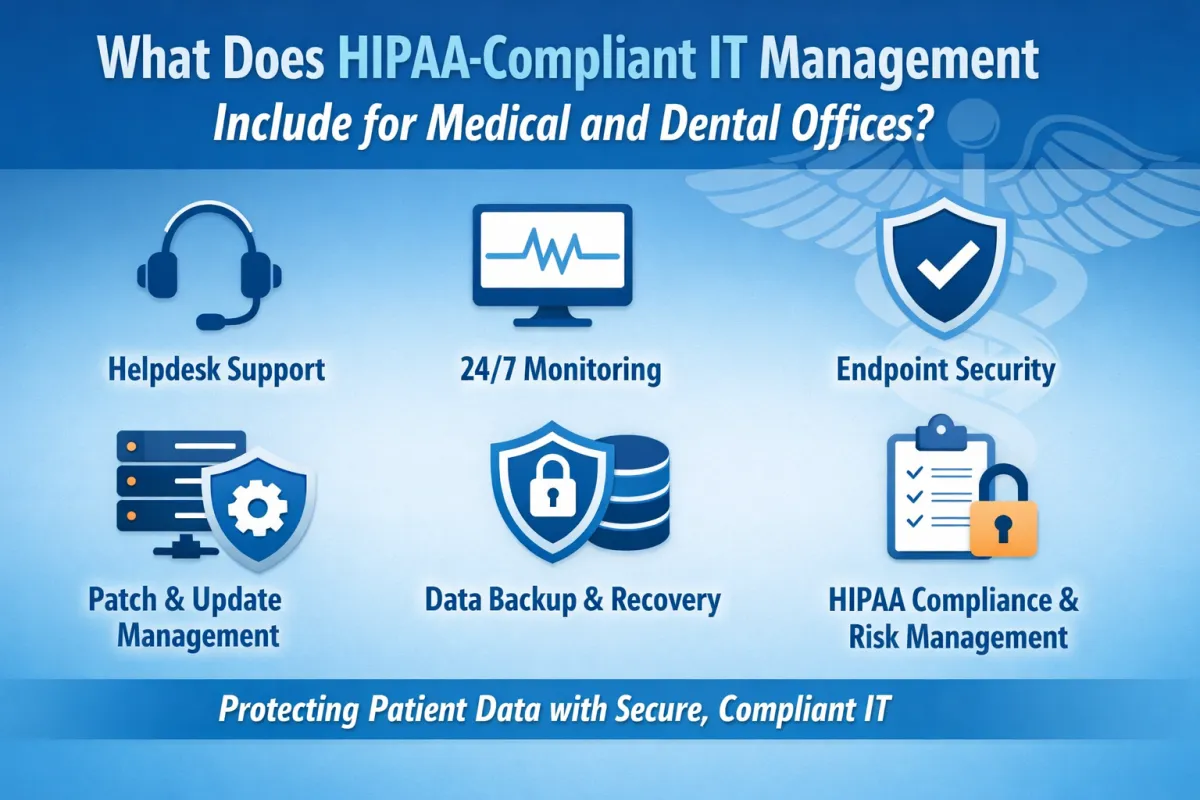
HIPAA-compliant IT management includes six core protection areas that safeguard patient data and reduce compliance risk. For medical and dental offices with 5–15 employees, this means IT systems must be actively monitored, secured, documented, and updated on an ongoing basis. Practices paying $125–$175 per user per month should expect compliance to be maintained continuously — not handled as a one-time setup.
Administrative Safeguards
HIPAA requires written policies and oversight, including:
Documented security policies and procedures
Defined responsibility for IT and security
Incident response planning
Vendor and access documentation
Regular risk assessments
Compliance is as much about process as technology.
Technical Safeguards
Technical safeguards control access to patient data and include:
Unique user logins
Role-based access controls
Multi-factor authentication
Endpoint protection
Secure remote access
These measures prevent unauthorized access and reduce internal risk.
Data Protection and Backups
HIPAA-compliant backups must be:
Encrypted in transit and at rest
Stored securely offsite or in the cloud
Tested regularly for recovery
Protected from ransomware
Backups ensure patient data can be restored quickly in an emergency.
Physical and Device Security
HIPAA also requires physical safeguards such as:
Secured servers and workstations
Procedures for lost or stolen devices
Secure disposal of old equipment
Segmented networks for staff and guests
Ongoing Monitoring and Training
HIPAA compliance is ongoing. This includes:
Continuous monitoring and alerting
Regular security updates
Staff security awareness training
Updated documentation for audits
HIPAA compliance must be maintained, not just installed.
Why Medical Offices Choose Tryon Computers
Tryon Computers provides HIPAA-focused IT management for small practices in the White Mountains, AZ, combining local support with proactive monitoring, risk management, and compliance guidance.
