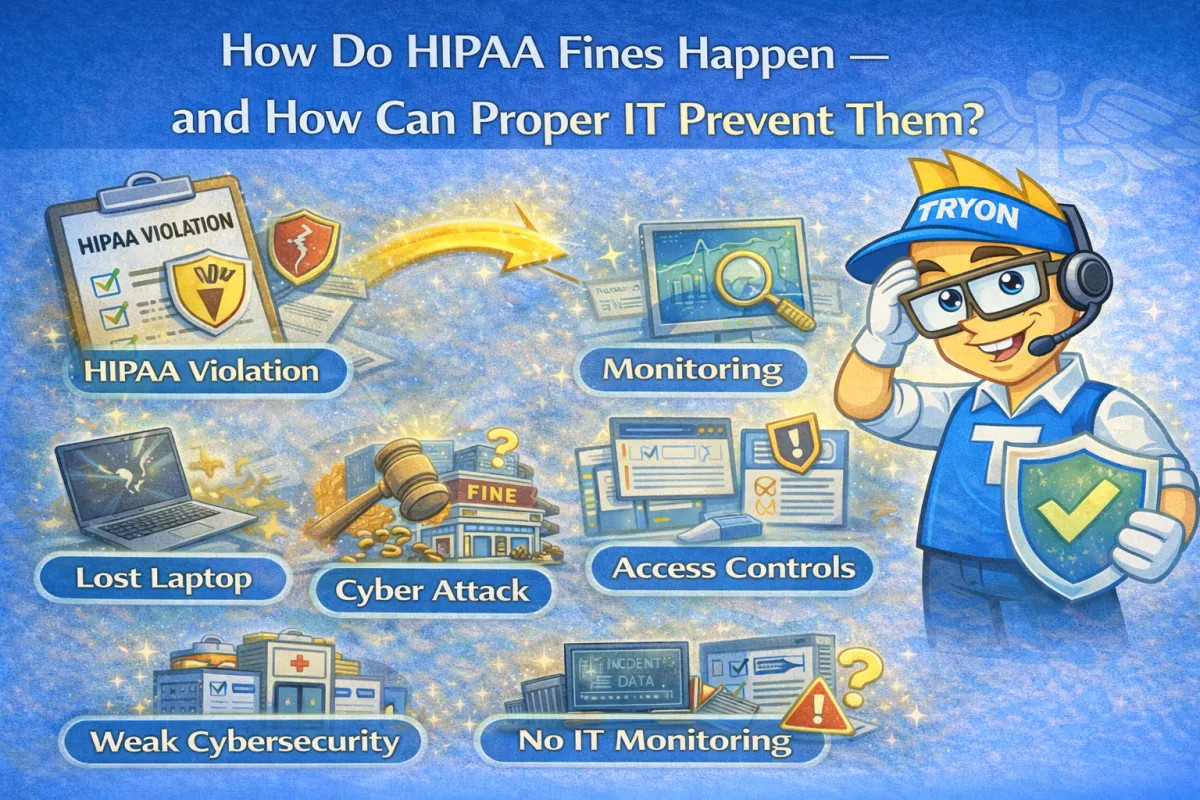
How Do HIPAA Fines Happen — and How Can Proper IT Prevent Them?
How Do HIPAA Fines Happen — and How Can Proper IT Prevent Them?
HIPAA fines can range from $100 to $50,000 per violation, with annual maximums reaching into the millions depending on the level of negligence. For small medical offices with 5–15 employees, fines often stem from preventable security gaps such as unencrypted devices, lack of access controls, or missing risk assessments. Proper IT management significantly reduces these risks by implementing safeguards, monitoring systems, and maintaining documentation.
Common Causes of HIPAA Violations
HIPAA violations frequently result from:
Lost or stolen unencrypted devices
Unauthorized access to patient records
Failure to conduct risk assessments
Inadequate access controls
Poor documentation
Most violations are linked to avoidable security weaknesses.
Technical Safeguards That Prevent Fines
Proper IT protection includes:
Data encryption (at rest and in transit)
Multi-factor authentication
Secure backups
Firewall and endpoint protection
Continuous monitoring
These safeguards significantly reduce breach likelihood.
Administrative Safeguards That Matter
Technology alone is not enough. Administrative protections include:
Written security policies
Staff training
Incident response planning
Access documentation
HIPAA compliance requires both technical and administrative controls.
The Role of Ongoing Risk Assessments
HIPAA requires regular risk analysis to:
Identify vulnerabilities
Prioritize remediation
Update documentation
Demonstrate due diligence
Risk assessments are not optional — they are required safeguards.
Cost of Prevention vs Cost of Penalties
For small practices, investing $125–$175 per user per month in proactive, HIPAA-aligned IT management is significantly less expensive than:
Regulatory fines
Legal costs
Downtime
Loss of patient trust
Prevention is almost always less costly than remediation.
Why Medical Practices Trust Tryon Computers
Tryon Computers delivers HIPAA-focused IT services, risk assessments, and ongoing monitoring for medical and dental practices in the White Mountains, AZ, helping reduce compliance risk and protect patient data.
